


Laboratory and materials
Laboratory & Materials
Research and development
We have established a laboratory within our company dedicated entirely to Research and Development, equipped with all the latest, state-of-the-art instruments needed to develop our polyurethane systems. This highly specialized environment enables us to explore new formulations and technologies, continually pushing the boundaries of our creativity and innovation. Our ultimate goal is to continuously improve and expand our product range, with a firm commitment to providing our customers with superior-quality products that fully meet their needs.
To achieve this, we carry out detailed chemical analyses to identify incoming raw materials, helping to ensure the highest quality of the materials we use. We also pay particular attention to characterising the chemical and physical properties of the finished product, in strict compliance with current regulations. All this is underpinned by ongoing, in-depth research into innovative products, enabling us to remain competitive in the market and meet the needs of an ever-evolving customer base. Our strength lies in carefully selecting raw materials and developing bespoke formulations in-house, tailored to the specific requirements of the finished product. This approach enables us to guarantee high quality and competitive solutions while maintaining excellent standards focused on customer satisfaction.
Polyurethane
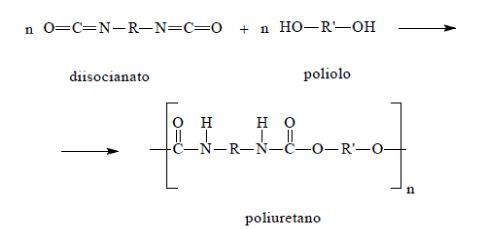
Polyurethanes are organic polymers containing urethane bonds in their structure. They are produced by the polyaddition reaction of a polyol and a diisocyanate. The polyurethane family includes a wide variety of products with different properties and fields of application. The properties of polyurethanes are determined by the type of diisocyanate and polyol used.
The main types of polyurethane are:
- Flexible foams
- Rigid foams
- Elastomers
- Fibres
- Coatings and paints
Polyurea
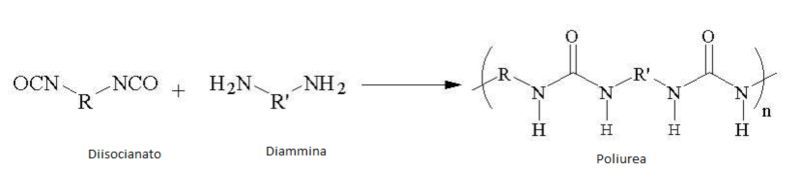
Polyurea is an elastomeric material obtained through the polyaddition reaction of a diisocyanate with a diamine. Depending on the desired properties, either an aromatic or an aliphatic diisocyanate can be used.
- Pure aromatic polyurea
- Aspartic polyurea
- Hybrid polyurea
Our objectives
- Meeting our customers’ needs and deciding together on the best strategy to optimise the finished product.
- Ensure consistent production quality and product reproducibility over time without altering its properties.
- Optimizing and monitoring our products, and continually improving them.
Determination of hydroxyl number
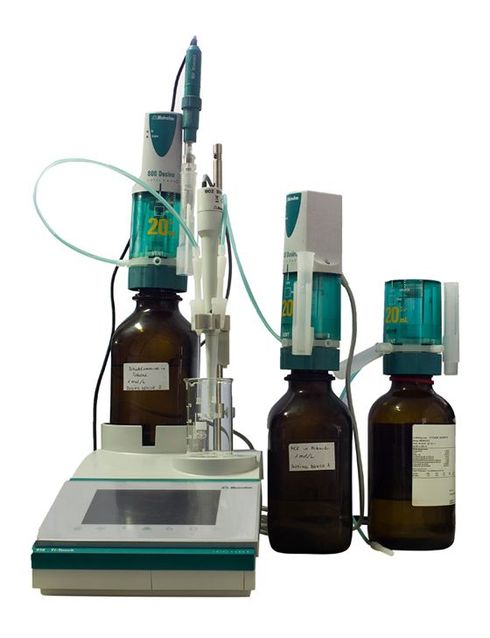
To ensure consistency and quality in the finished product, it is essential to know the hydroxyl number of the starting polyol. The hydroxyl number is defined as the number of milligrams of KOH equivalent to the hydroxyl content of 1 gram of sample.
Determination of NCO group content
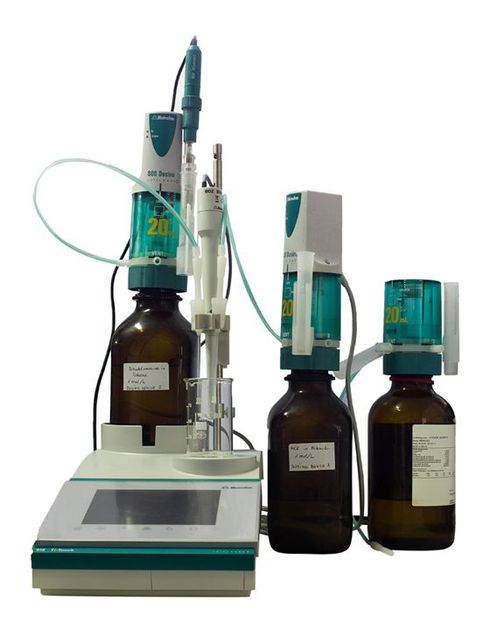
The percentage of free NCO groups that react with an excess equivalent of n-butylamine is determined.
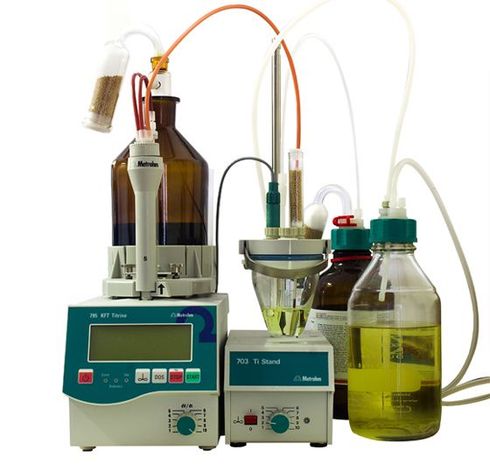
Water content
The Karl Fischer titrator is used to quantitatively determine the water content of liquid, solid, and powder samples.
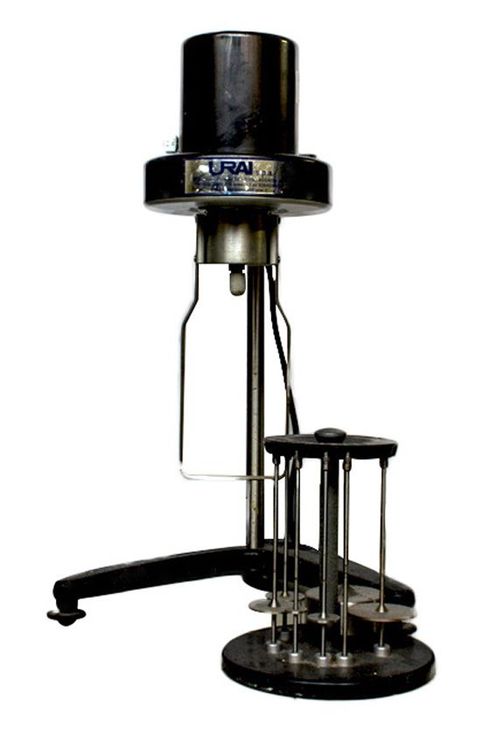
Viscosity measurement
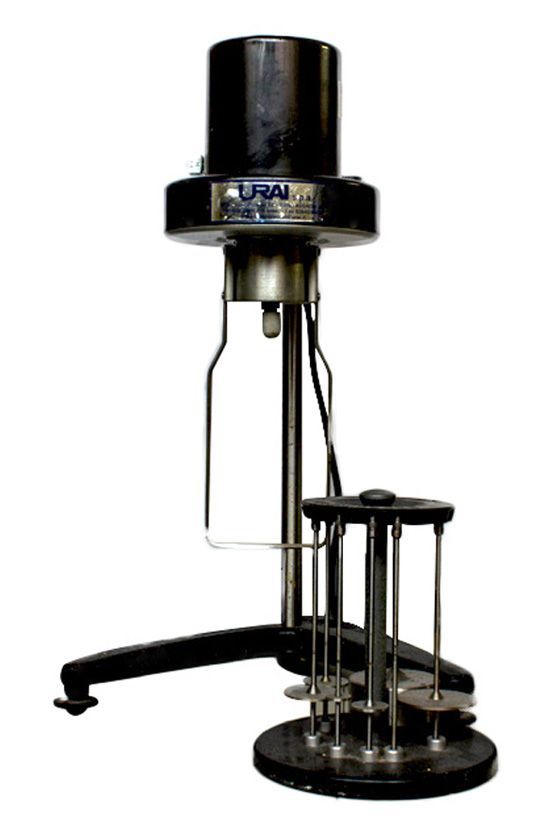
VISCOMETER
To improve processability and mixing between components, it is necessary to know the viscosity of incoming products.
The test is performed in accordance with EN 13702.
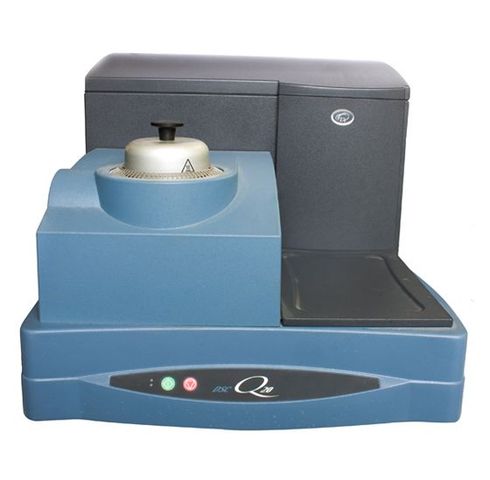
Differential scanning calorimetry analysis
DSC
This technique can be used to evaluate glass transition, melting temperature, crystallization, phase changes, thermal and oxidative stability, curing kinetics, and more.
This information is obtained by measuring the energy the sample must absorb or release until it reaches the same temperature as the reference sample.
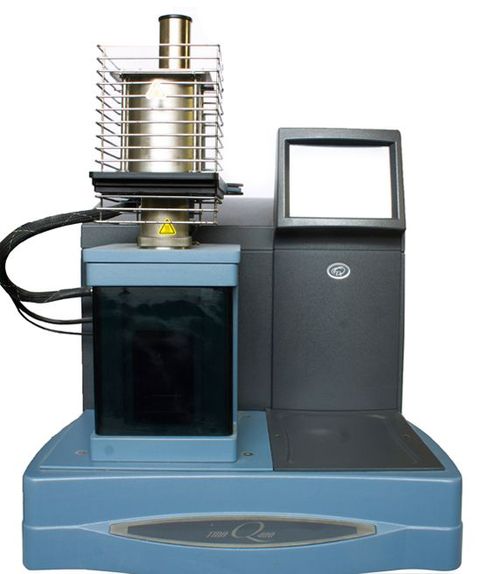
Thermomechanical analysis
TMA
Thermomechanical analysis (TMA) is a technique used to measure changes in the dimensions of materials over time and as a function of temperature and applied force.
This technique can be used to determine the coefficient of thermal expansion, elastic modulus, change in specific volume and the softening point of the material.
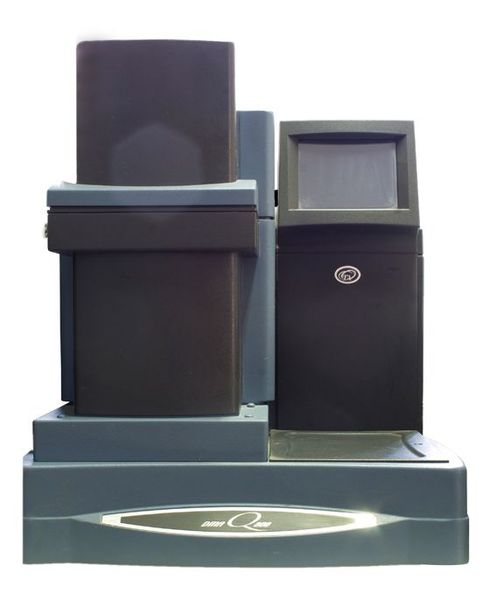
Dynamic mechanical analysis
DMA
This instrument can be used to characterize the viscoelastic properties of polymers.
The most common applications of this technique, which detects exothermic and endothermic phenomena occurring in a material placed in the calorimeter, include determining melting and glass transition temperatures and specific heat, as well as studying the crystallization kinetics of polymer-based materials.
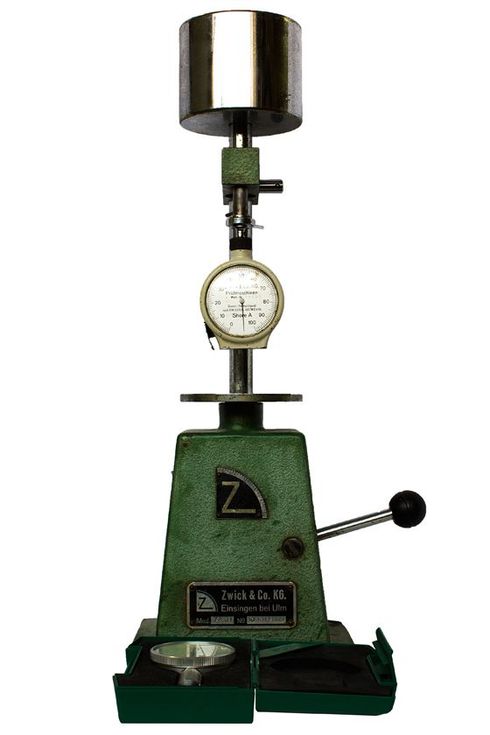
Hardness testing
DUROMETER
In our laboratory, hardness is measured on the Shore A and Shore D scales in accordance with DIN 53505. The test is based on measuring how far an indenter penetrates the material being examined.
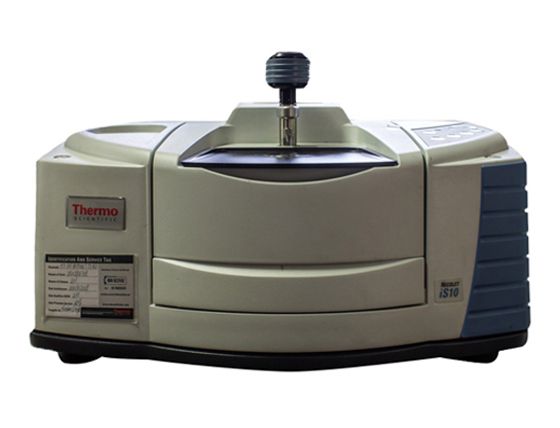
FTIR Analysis
FTIR SPECTROMETER
Infrared spectroscopy is a fast and highly useful technique for analysing incoming raw materials and identifying unknown samples.
This technique provides information about the functional groups and chemical bonds in the product being analysed, based on the interaction between infrared (IR) electromagnetic radiation and molecular systems, which affects their vibrational and rotational energy levels.
The infrared spectrum of the raw material or product is compared with spectra in the database to assess the degree of correlation.
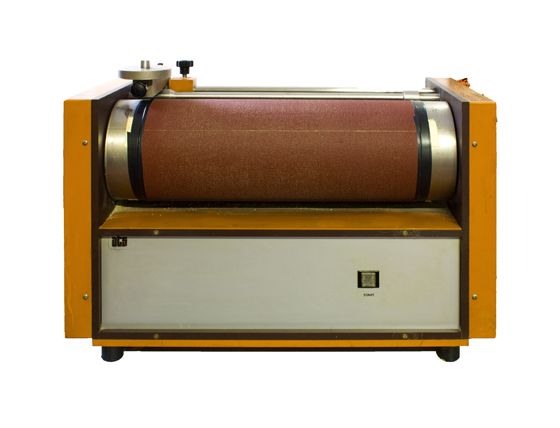
Abrasion resistance
ABRASION TESTER
Tests are carried out on specimens taken from the material being examined, in accordance with DIN 53516. Mass loss is measured by the amount of material worn away as it travels across a rotating cylinder covered with abrasive paper.
Abrasion resistance is a complex property to test, as it is linked to other material properties such as tensile strength, hardness, and elastic modulus. Abrasion resistance is measured in mm³. The lower the value, the greater the material’s resistance. Thanks to our research, we have developed materials with excellent abrasion resistance.
Mechanical properties
UNIVERSAL TESTING MACHINE
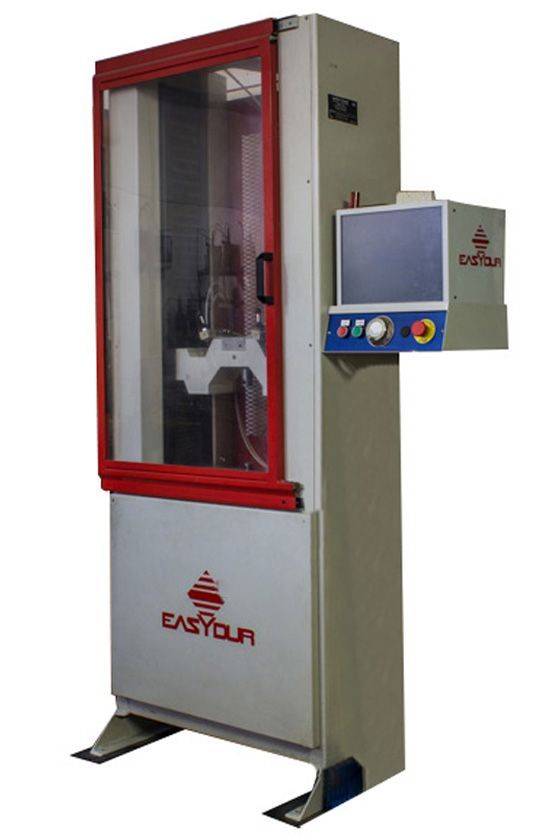
The physical and mechanical properties of materials are determined in our laboratory using an Easydur Universal Testing Machine, configured according to the type of test required, such as tensile, compression, or flexural testing.
Tensile strength: to assess how the material behaves under a short tensile load, we carry out the test in accordance with DIN 53504. The test measures the maximum force per unit cross-sectional area required to reach the breaking point. Results are expressed in MPa.
Compressive strength: To complete the evaluation of rigid materials, compression tests are performed to identify the stress-strain curve and obtain useful information about the product’s linear-elastic behavior (Young’s modulus) and its behavior at failure.
Flexural strength: This test is used to characterize all rigid and semi-rigid materials. Prismatic specimens with a square cross-section are used in accordance with DIN 53452, and mechanical strength properties are measured in a 3-point bending test. The value is expressed in MPa.
Chemical resistance
A material’s chemical resistance depends on several factors, including exposure time, temperature, and concentration. When chemical degradation occurs, the polymer’s molecular chains react with the chemical substance, potentially damaging the material. The degradation process begins with swelling, during which the solution containing the chemical agent is absorbed into the material’s structure. After the liquid evaporates, if it has not reacted with the material, the material returns to its original form.
Resistance to acids and alkaline solutions: These substances can be aggressive to polyurethane, even at room temperature. Our material can withstand brief exposure to dilute acidic and alkaline solutions at room temperature. Long-term contact with concentrated acids or alkaline solutions is not recommended.
Resistance to saturated hydrocarbons: when polyurethane comes into contact with saturated hydrocarbons such as diesel fuel, petroleum ether, kerosene or isooctane, the surface swells, but after a certain period the material tends to return to its original dimensions.
Resistance to aromatic hydrocarbons: Contact with aromatic hydrocarbons such as benzene and toluene causes surface swelling and reduces mechanical properties.
Resistance to oils and fats: polyester-based polyurethane is more resistant to oils and fats; compatibility with additives must be checked, as their contents may cause irreversible damage.
FAQ - Frequently asked questions
Does Valpolymer develop custom polyurethane formulations?
Yes. Our in-house laboratory allows us to select raw materials and develop custom formulations for specific performance requirements.
Can polyurethane hardness be customized?
Yes. Elastomeric polyurethane can be supplied with adjustable hardness to suit the intended application and required performance.
What materials does Valpolymer process besides polyurethane?
Valpolymer processes polyurethane resins, thermoplastic and thermosetting materials, and engineering plastics.
Are food-contact-compliant materials available?
Yes. Valpolymer offers polyurethane solutions formulated for food industry applications, with specific properties to suit the conditions of use and the requirements involved.
Does Valpolymer offer solutions for ATEX environments?
Yes. Solutions suitable for ATEX applications are available.
What is the weight range of the components you produce?
Custom manufacturing for parts weighing from approximately 1 gram to 2,500 kg.
5023
Hours of Work
1895
Satisfied Clients
650
Completed Projects
33
Awards Won
Need information about the materials we process?
For more information or to discuss your requirements, contact us



